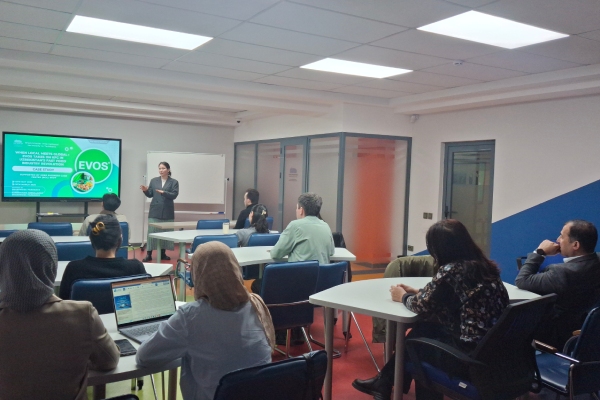
On March 18, 2026, the Graduate School (Research) hosted an engaging session of the Graduate Café featuring Shakhnoza Pardaeva, who presented her case study titled "When Local Meets Global: Evos Takes on KFC in Uzbekistan's Fast Food Industry Revolution."
The presentation examined the strategic battle between local fast-food giant Evos and global entrant KFC following the latter's entry into the Uzbek market in 2018. Using operational data, customer satisfaction surveys, and strategic planning documents, Shakhnoza analyzed how Evos faced declining market share due to operational inefficiencies, slower service times, and shifting consumer preferences intensified by KFC's arrival.
The research highlighted critical recommendations from Evos, including improving operational efficiency, embracing automation, refreshing brand identity, and strengthening customer loyalty programs to retain market share. The case underscored the vital importance of adapting to international competition while maintaining local cultural relevance.
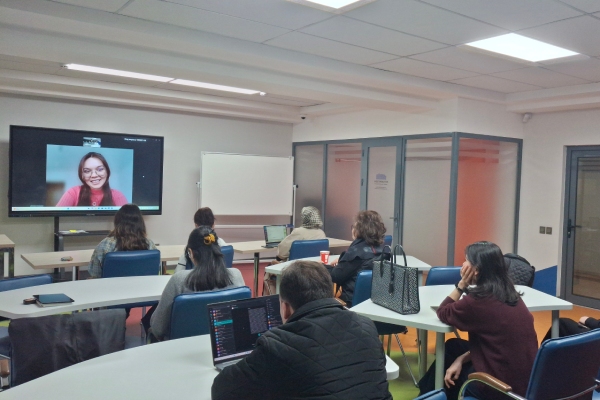
On March 11, 2026, the Graduate School (Research) hosted a special session of the Graduate Café, featuring distinguished guest Manzura Jumaniyazova, Researcher in Development Economics and Global Health at the Technical University of Munich. The event, titled "Gender, Birth Order, and Child Growth: Evidence from Central Asia," provided an insightful exploration of how gender norms and household dynamics shape child development outcomes in the region.
Manzura Jumaniyazova presented compelling evidence from applied microeconometric analysis, examining the complex interplay between birth order, gender, and early childhood growth in low- and middle-income contexts. Her research highlighted how intra-household dynamics and deeply rooted gender norms influence child health outcomes across Central Asia, offering critical insights for development policy and intervention design.
Participants actively engaged in a rich discussion following the presentation, exploring questions on measurement challenges, policy implications, and avenues for future research.
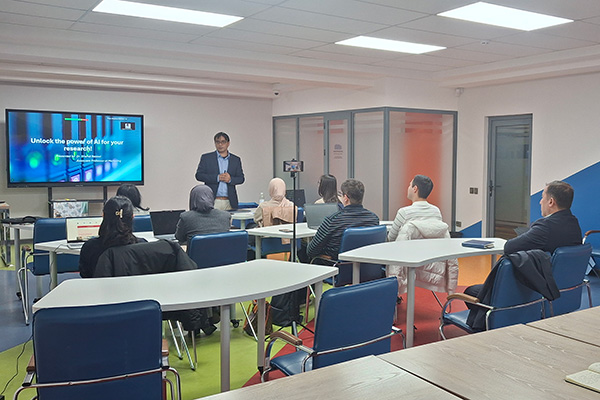
On March 4, 2026, the Graduate School hosted an interactive and practical workshop session of the Graduate Café, featuring Dr. Shahid Rasool, Associate Professor at the Westminster School of Business (WSB). The event, titled "Unlock the power of AI for your research" provided participants with a hands-on exploration of cutting-edge artificial intelligence tools designed to support academic writing and the publication process.
Dr. Rasool guided attendees through a range of AI applications that assist in literature review, manuscript drafting, data visualization, reference management, and journal submission workflows. Participants actively engaged with the tools on their laptops, gaining real-time experience and practical insights into integrating AI into their research practices.
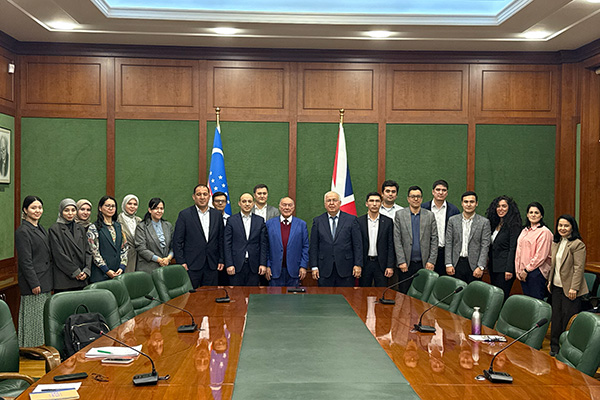
As part of the Graduate Café Discussion Series, the Graduate School (Research) successfully hosted a special meeting with Academician, Professor, Doctor of Economic Sciences Gʻulomov Saidahror Saidahmedovich on 25th February 2026.
The seminar, titled “Economic Reforms in New Uzbekistan,” brought together students, researchers, and faculty members for an engaging and insightful discussion on the country’s ongoing economic transformation. Academician, Professor Gʻulomov shared his perspectives on structural reforms, digital economy development, innovation policies, and the strategic priorities shaping Uzbekistan’s future.
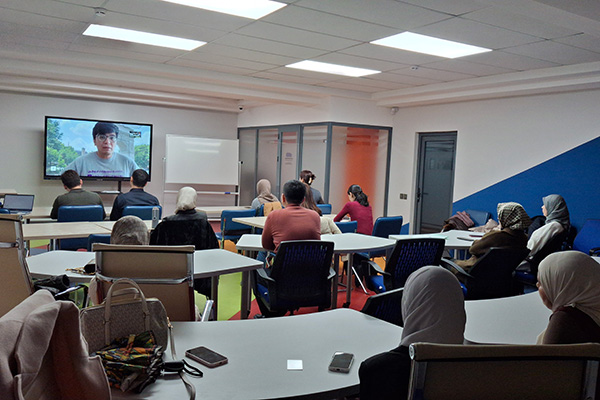
On January 22, 2026, the Graduate School hosted a special online session of the Graduate Café, featuring distinguished guest Dr. Bekhzod Khoshimov from NYU Abu Dhabi. The event, titled “AI Methods in Social Sciences,” provided an insightful exploration of how cutting-edge methodologies are transforming research across disciplines.
Dr. Khoshimov delivered a comprehensive introduction to the application of artificial intelligence in social science research. His presentation demonstrated how AI techniques—including machine learning and natural language processing—are being used to analyze complex social, economic, and entrepreneurial phenomena.
Participants actively engaged in the Q&A session, posing thoughtful questions on the practical implementation of AI tools, ethical considerations, and future methodological trends. This session served as a forward-looking forum for methodological innovation, inspiring interdisciplinary dialogue and equipping researchers with new perspectives on integrating AI into social science inquiry.
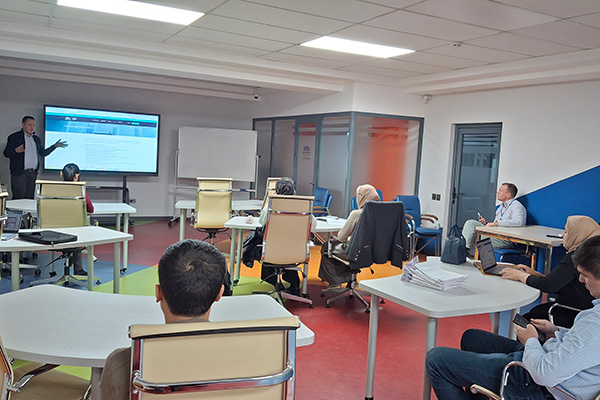
On January 14, 2025, the Graduate School and the Learning Resources Centre (LRC) jointly hosted the first Graduate Café session of the new year. The event featured Iskander Raxmatullayev, LRC Enhancement Unit Specialist, who presented “An Introduction to LRC Research Portal: Functionality and Opportunities.”
This practical and informative session was designed to enhance the research capabilities of the academic community. Iskander Raxmatullayev provided a comprehensive overview of the LRC Research Portal, demonstrating its key functionalities, search capabilities, resource access, and integration with academic workflows.
The Graduate Café served as an interactive forum, empowering researchers with the digital tools and knowledge needed to support and streamline their academic projects and literature review processes.
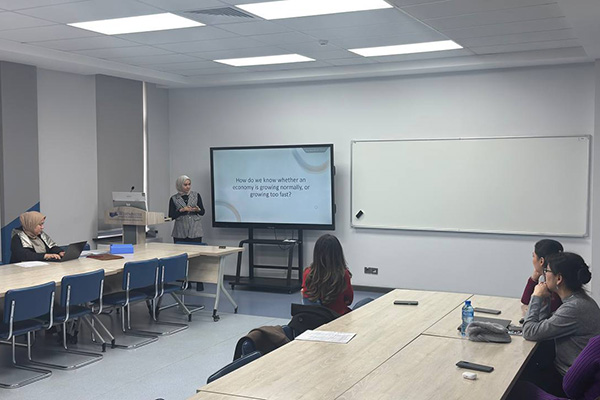
On December 24, 2025, the Graduate School hosted a dual-presentation session of the Graduate Café, featuring insights on macroeconomic measurement and social behavior.
Azizakhon Mukhammedova, PhD candidate in Econometrics and Statistics, opened the session with her presentation “Potential GDP and Output Gap.” She provided a clear and concise examination of these key macroeconomic concepts, focusing on their measurement and significance for economic policy and performance evaluation.
Azimjon Musamuhamedov, PhD candidate in Management, followed with “The role of income, happiness and norms on charitable giving in Uzbekistan.” His presentation explored the social and psychological drivers behind philanthropic behavior, analyzing how factors such as income, personal well-being, and social norms influence charitable decisions within the local context.
The session fostered a rich, interdisciplinary dialogue, bridging economic theory with behavioral insight in a dynamic academic forum.
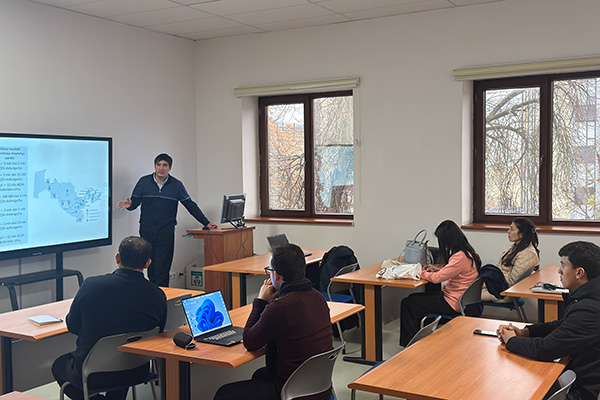
On December 17, 2025, the Graduate School hosted an engaging session of the Graduate Café, featuring a presentation by Abdulatifxon Anvarxonov, PhD candidate in Econometrics and Statistics. The event, titled “Maxsus iqtisodiy zonalar va iqtisodiy o‘sishning nazariy asoslari” (“Special Economic Zones and Theoretical Foundations of Economic Growth”), provided a platform for a timely and insightful discussion on the role of economic policy in national development.
Abdulatifxon Anvarxonov led a comprehensive examination of the design and function of special economic zones as key drivers of investment, innovation, and regional growth. His presentation offered a nuanced view of how theoretical economic frameworks are applied in real-world policy contexts, fostering an in-depth dialogue on strategies to stimulate sustainable economic development.
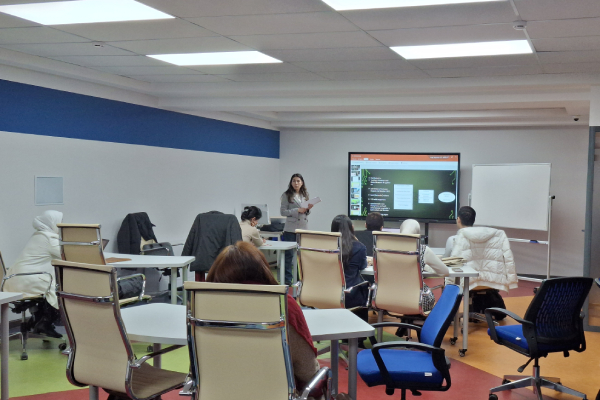
On December 10, 2025, the Graduate School hosted an engaging session of the Graduate Café, featuring a presentation by Aziza Ibrokhimova. The event, titled “Museums, their development and contemporary analysis of visitor experience,” provided a platform for a rich and insightful discussion on the evolving role of cultural institutions.
Aziza Ibrokhimova led a compelling exploration of how museums have transformed from static repositories into dynamic centers of public engagement. Her presentation traced the historical development of these spaces while offering a nuanced, contemporary analysis of the factors that shape the modern visitor experience. The discussion fostered a stimulating dialogue on how museums balance education, preservation, and community interaction in the 21st century.
Contact us
Tashkent, Istiqbol st., 12
-
Extentions: ext 566
-
Enquiry office: (+998 71) 238 74 00
-
Enquiry office: research@wiut.uz
Follow Us